Category: Dailies
(Video) Ballpark Figures: Man vs. Machine – Middle Infielders
By Bloomberg Sports //
Man vs. Machine: Episode 3 — In a special from Bloomberg Sports’ Ballpark Figures, Mets legend Keith Hernandez sits down with Bloomberg Television’s Michele Steele and Bloomberg Sports Analyst Rob Shaw, to discuss the Fantasy Bulls and Bears for the second half of the season. In the third episode, the focus is on middle infielders.
Today’s Position: Second Base and Shortstop
Bulls
The Machine (Bloomberg Sports) says:
Blue Jays second baseman Aaron Hill is bound to bounce back after a brutal start to the 2010 season. Hill hit just .188/.271/.359 in his first 71 games, marks that are well below both his career averages and 2009 totals. Last season, the best starting second baseman north of the border (well, the only one actually) slugged .498 with a .285 batting average. Most important for fantasy owners were Hill’s 36 homers and 108 RBIs last season, numbers you just don’t normally see from a middle infielder.
So why has Hill struggled so mightily this year? It is due in large part to his BABIP (Batting Average on Balls In Play), which currently sits at .179, a number which is well below Hill’s career BABIP of .294 and is the lowest of any full-time position player in the majors. Once that number regresses closer to his true level (which is most likely a standard deviation or two plus/minus his career rate), Hill should see a dramatic improvement in his other stats that help fantasy teams win ball games, most notably Batting Average, RBI, and Runs.
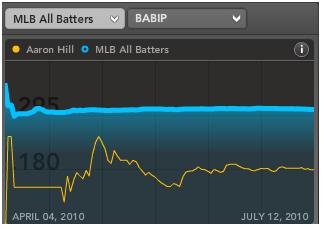
Many of your friends (also known as “competition”) will be reevaluating their teams over the All-Star break and may just give up on Hill. This could be your chance to buy low and stick it to them.
The Man (Keith Hernandez) says:
“I like Freddy Sanchez of the Giants, a former batting champion for the Pittsburgh Pirates. He was injured this year and missed a lot of playing time in the first half. He’s healthy now and he’s going to be playing every day, he’s a very good hitter. He’s a lock for the second half.”
Bears
The Machine (Bloomberg Sports) says:
Give Ty Wigginton some credit if he’s on your fantasy team; he certainly has deserved it with solid numbers for a second baseman. You get some credit for picking him for the first half as well. However, now that he’s on the All-Star team, other fantasy owners may be looking at him to provide some pop for their lineups. This is why it’s time to sell high on him.
Wigginton’s numbers aren’t mindboggling, but they certainly buck the trend of his recent history. Despite hitting just 11 homers in 122 games in 2009, he has gone deep 14 times already in just 83 games this year. In the same amount of time Wigginton has also produced four more RBI, despite the large differential in games played. Finally, he has already scored 32 runs this year, 73% of his 2009 total. With the Orioles struggling to score runs on most nights, he may not be rounding third base all that often in the second half.
It may be tough to give up Wigginton after his hot start to 2010. But trust the numbers and try to get the best package you can for him now, before this unlikely All-Star’s numbers begin to decline.
The Man (Keith Hernandez) says:
“Kelly Johnson got off to a quick start two months into the season, but he’s tapered off since. Anybody I feel that plays for Bobby Cox and ends up getting traded you have to pay attention to. He has regressed each year. He has not had the career that I expected and I think he played over his head early on. It’s a tough year in Arizona and I see him faltering in the second half of the season.”
Bulls
The Machine (Bloomberg Sports) says:
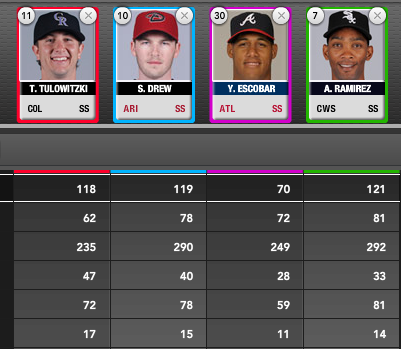
If you’re scratching your head over one player on your fantasy roster this season, it’s probably Braves shortstop (now Jays shortstop!) Yunel Escobar. Escobar has one of the most talented swings out of all major league shortstops, as the right-handed hitter smacked 14 home runs last year while hitting .299, his highest batting average since his .326 rookie season in 2007. However, this year has been much different for the usually consistent middle infielder. Escobar has yet to hit a home run for the entire season and his .237 batting average is absurdly low, leaving fantasy owners puzzled and upset. However, Escobar’s .269 BABIP may be a culprit, as it is way under his career rate of .316.

The hits will eventually come for Escobar, and right now your friends would probably beg you to take him off of their hands. Be a good friend and do them a favor by giving Yunel a shot. The change of scenery to Toronto, better second-half health, and some good, new-fashioned regression could work to your advantage.
The Man (Keith Hernandez) says:
“The calf injury hurt Jimmy Rollins twice this season. He should come back healthy for the remainder of the season. He is the catalyst of this team. When he came back the Phillies started to win. I think the second half is going to be all Jimmy Rollins.”
Bears
The Machine (Bloomberg Sports) says:
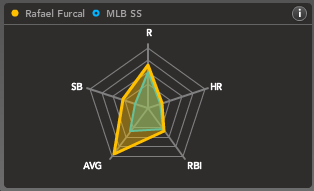
Last year, Rafael Furcal put together one of his worst seasons in the major leagues, hitting just .269/.335/.375 over 150 games. Despite his usually good speed, he swiped just 12 bases, his lowest ever over a full season in the big leagues. Well, Furcal has come back with a vengeance this year, hitting .333, tops in the National League. However, the biggest surprise may be Furcal’s pop; he’s slugging .514 in 2010, higher than any other full season in his big league career (which stretches back to 2000).
Right now, Furcal is playing like he’s 26 years old all over again. However, we know that he isn’t likely to keep up this pace, and he’s probably going to drop significantly from his current numbers. If you offer him in a deal, your friends may jump at the idea of getting an All-Star who has been playing so magnificently this season. With that said, keep in mind this is a shallow pool for shortstops this season. Even with some regression likely, don’t trade Furcal if you’re not getting a solid haul in return.
The Man (Keith Hernandez) says:
“The veteran Juan Uribe had a terrific RBI start in the first half. He got a lot of playing time because of Freddy Sanchez[‘s injury]. I think the playing time will start to diminish. Since he is an older player I think he will tire and not have the same type of half moving forward.”
(Video) Ballpark Figures: Man vs. Machine – Corner Infielders
By Bloomberg Sports //
Man vs. Machine: Episode 2 — In a special from Bloomberg Sports’ Ballpark
Figures, Mets legend Keith Hernandez sits down with Bloomberg Television’s
Michele Steele and Bloomberg Sports Analyst Rob Shaw, to discuss the Fantasy
Bulls and Bears for the second half of the season. In the second episode, the
focus is on corner infielders.
Today’s Position: Corner Infielders 1B and 3B
Bulls
The Machine (Bloomberg Sports) says:
Mark Teixeira has long distinguished himself as a slow starter, and he’s done
little to shed that label in 2010. Let’s take a graphical look at the
trajectory that his OPS has taken over the past few seasons:
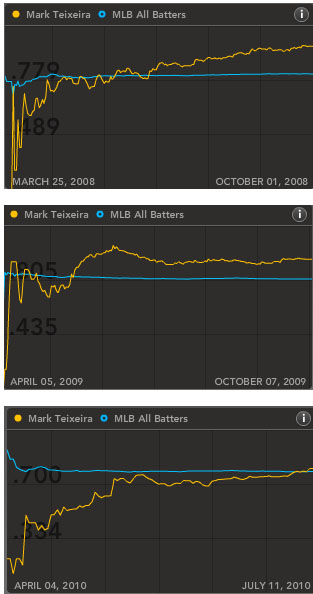
The pattern is clear; whether by chance or as a result of some inate
predisposition toward starting slowly, Teixeira has turned in his best work in
the second half over the course of his career. The Yankee has yet to surpass
that blue benchmark line by much in 2010, but history suggests that he’ll soon
be putting some distance between himself and the rest of the league.
At age 30, it’s possible that Teixeira’s best seasons might already be behind him, but very unlikely that the first baseman has simply fallen off a cliff. His walk rate and strikeout rate haven’t suffered during his slow first half,
and he’s been red-hot in July. Some of Teixeira’s struggles are attributable to
the fact that he’s been plagued by a low BABIP (Batting Average on Balls in
Play). Teixeira posted .301 and .316 BABIPs in 2009 and 2008, respectively.
His .248 figure from this season should continue to regress toward the mean as the
season progresses, bringing his other rate statistics up with it.
Our year-end projection isn’t fooled by Teixeira’s disappointing production
to date, foreseeing a .300/.393/.600 second half for the slugging first
baseman. Considering the .243/.352/.453 line next to his name as we near the
All-Star break, anything resembling that caliber of performance would qualify
as a resounding success.
The Man (Keith Hernandez) says:
“Well, I very seldom agree with the machine, but I have to agree this time. I’m going
to have to go with Mark Teixeira, and why, because A) he’s a switch hitter, and B)
his track record, he’s always been a slow starter. Now this is obviously a
real bad start for him, he’s had a bad first half, but normally his bad starts
are April. He’s carried over to June. I got to believe the three days off in
that all-star break and hitting left-handed more in Yankee Stadium (which is
conducive to left-hand hitters), [will help]. Even though he’s a switch-hitter, I think he’s going to have a terrific second half. He’s my man.”
Bears
The Machine says:
Justin Morneau has been one of the American League’s leading offensive
performers for several seasons, so the fact that he’s had a standout first half
is certainly no fluke. In every category except stolen bases (he has yet to
attempt one), Morneau has been quite a boon to his fantasy owners (not to
mention the Twins):
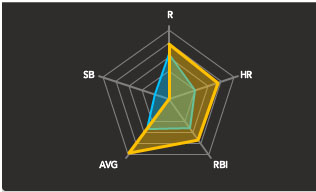
Morneau won the AL MVP award in 2006 and finished second in the voting in 2008.
But his performance in 2010, pro-rated over a full-season, would blow away both
of those campaigns. To say that we’re bearish on him is simply to say that we
expect his performance to be merely great, rather than otherworldly, going
forward.
Has the slugging first baseman truly attained a new level of performance? He
does seem to have become more selective: his 3.90 Pitches per Plate Appearance seen this season easily trump his career rate of 3.64. As a result of working
deeper into counts, Morneau is both walking and striking out more often.
However, these changes don’t seem to be driving Morneau’s inflated performance.
The All-Star’s career BABIP rests at .295; but his seasonal BABIP stands at a
lofty .385. A leap of that magnitude is extremely unlikely to be the result of
an improvement in underlying skill level, so we can conclude with a fair degree
of confidence that Morneau has been benefiting from a hearty helping of good
luck, which we shouldn’t expect to continue.
Assuming Morneau’s concussion symptoms (from his collision with John McDonald‘s
knee) don’t linger, he should be a safe bet to provide fantasy owners with his
customarily valuable production for the balance of the season; our
projection pegs him for a .282/.366/.534 second half. If you can find an owner
willing to believe that Morneau’s stratospheric BABIP is sustainable, he might
be a suitable sell-high candidate, especially if you can get a true superstar for him. Otherwise, he’s still a fine hold.
The Man says:
I look at the Atlanta Braves, and I look at Troy Glaus. And why, because he’s
a man who’s always had injuries his whole career. It’s all about Troy staying
healthy; can he stay healthy this year? I think that he’s going to start to wear down, maybe get a couple of minor injuries that are going to slow him down, even though he’s been terrific in the first half and one of the reasons why the Braves are on top in the National League East. I don’t think he’s going to have the second half he had the first
half.
Bulls
The Machine says:
Evan Longoria has had a fine first half, and deserves to be placed near the top of any list of the league’s most valuable players. Even so, we think there’s
room for improvement in Longoria’s near future.
Overall, he’s had his most productive season at the plate, walking more often
and striking out less often than he did in either 2008 or 2009. He’s also had
some elevated success on balls in play, enjoying a .341 BABIP before the break
(compared to a .319 career rate). Those factors have culminated in a stellar .
299/.381/.513 line. But despite the luck on balls in play, Longoria’s slugging
percentage is his lowest yet seen in the majors. His Isolated Power (SLG minus AVG)
has fallen from .259 in 2008, to .245 in 2009, to only .214 this season.
Our projection foresees a rise to unprecedented heights in the
second half, calling for the third baseman to post a .294/.380/.575 performance
down the stretch for Tampa Bay. Longoria has launched 13 long balls
thus far in 2010; the Machine expects 20 more over the remainder of the
season.
Longoria’s fantasy owners have enjoyed the return on their investments so far, but the slugger’s best in 2010 may be yet to come.
The Man says:
I am going to go with Los Angeles Dodgers third baseman Casey Blake. Why?
Because he is just one of those players that I like. It’s just a hunch, I think
he is going to be one of the guys, on a hunch, one of the key players in the
second half for the Dodgers.
Bears
The Machine says:
Adrian Beltre is enjoying his best season since his monster 2004, and his
fantasy owners are reaping the benefits:
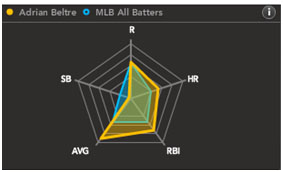
However, while the slick-fielding third baseman won’t disappear at the plate
for the rest of the season, his best offensive performance is likely behind him.
Beltre’s offensive talent was obscured by Safeco Field during his tenure in
Seattle. Fenway Park is a far better park for a hitter of his profile, so some
of Beltre’s improvement this season can be attributed to his environment–some,
but not all. Beltre’s walk and strikeout rates are hovering near their career
levels, and his Isolated Power is elevated, but not extraordinarily
so. Only one individual component of his production seems to be responsible for
the bulk of his uptick in overall productivity.
Beltre’s BABIP currently hovers at .372. His career rate is .293, and he’s
never finished a season with a rate higher than .325. Subtract his extremely
good fortune on balls in play, and his line would resemble a more typical
Beltre performance from the past few years. Beltre’s first-half performance happened, and no amount of
retroactive analysis can take it away. However, when forecasting future
performance, we shouldn’t expect a run of good luck to continue. Our projection does pegs a .273/.320/.463 line for
the rest of the way. If you’d be satisfied with that production from your third baseman, don’t hesitate to hang onto Beltre. If you can get a big haul in trade for him, though, do it.
The Man says:
Jose Bautista. I think that he had just a first half off the
charts. All the home runs he’s hit, I can’t imagine him matching the second
half. He’s been around a long time, he’s a veteran, he’s on the backside of his
career. He’s just had an awesome first half, I just can’t see him matching it.
(Audio) BTN with ESPN.COM’s Nate Ravitz
By Bloomberg Sports //
Listen now! – (loads in new browser)
Behind the Numbers
Hosts: Wayne Parillo and Rob Shaw
Guest: Nate Ravitz of ESPN.COM
Total Running Time: 32:23
High Level Look
- Nate’s life before and being Deputy Editor for ESPN (0:00 – 4:35)
- The business reason for no fantasy pro wrestling (4:36 – 7:15)
- A postion-by-position breakout players for the second half (7:16 – 32:32)
Some other highlights
- Matt Wieters and development problems for the Orioles players? (8:02 – 10:20)
- Prince Fielder and all about the Brewers (10:23 – 12:00)
The position-by-position breakdown and highlights
- Catchers (7:30 – 10:00) Matt Wieters & other stars
- First base (10:20 – 12:00) Is Fielder on the move?
- Second Base (12:13 – 15:22) What to do with Brian Roberts
- Short Stop (15:30 – 17:14) Beyond Hanley and is Elvis Andrus a top 5 shortstop?
- Third Base (17:15 – 20:08) Is Kung Fu Panda done and what to do with Chipper Jones
- Outfielders (20:09 – 23:46) Why buy Alex Rios? Plus Torii Hunter, and Delmon Young, and Corey Patterson
- Closers (23:51 – 27:30) The lack of closer turnover and all about Capps, Bell, and Dotel
- Starters (27:34 – 31:25) Why Jiminez might not be a top five pitcher the rest of the season, and selling high on young pitchers and why you shouldn’t be concerned about the Reds.
Direct link to the conversation
More ways to get Behind the Numbers, talk to us, or just have a good time
Rafael Furcal: A Risk Worth Taking
(Video) Ballpark Figures: Man vs. Machine – Catchers
By Bloomberg Sports //
Man vs. Machine: Episode 1 — In a special from Bloomberg Sports’ Ballpark Figures, Mets legend Keith Hernandez sits down with Bloomberg Television’s Michele Steele and Bloomberg Sports Analyst Rob Shaw, to discuss the Fantasy Bulls and Bears for the second half of the season. In the premiere episode, the focus is on catchers.
Man vs. Machine – Catchers
By Bloomberg Sports //
Throughout All-Star week, Bloomberg Sports will be running head-to-head match-ups, pitting Bloomberg Sports analysis against Keith Hernandez’s decades of wit, wisdom and experience. Check back throughout the week as we cover first-half Bulls and Bears predictions for every position.
Leading off today: Catchers
Bulls
The Machine (Bloomberg Sports) says:
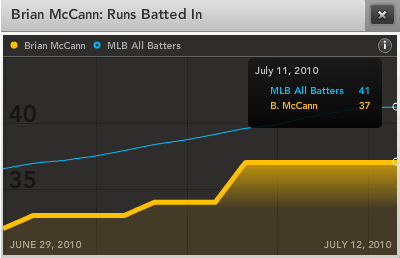
Brian McCann has been one of the most consistent fantasy batters over the past three seasons. Starring at catcher, always a weak fantasy position, owners could pencil him in for 40 doubles, 20 home runs and 90 RBI. So far in 2010 his numbers are down a bit, with 16 doubles, 10 HR and 37 RBI.
Looking at McCann’s RBI total for 2010 we can see that he is just below the league average.
…while last year McCann’s RBI total was well above league average.
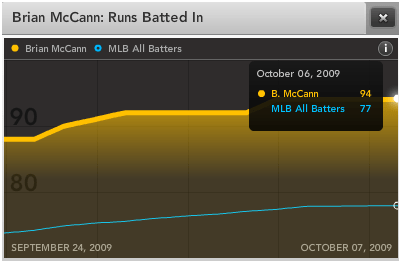
McCann has especially struggled with runners in scoring position so far, posting a .241 batting average in those situations in the first half. If he bounces back in the second half, as we should expect him to, his RBI numbers should increase significantly and help your fantasy team.
McCann’s low counting stat totals for the season have been buoyed by a strong performance in the month of July (he has posted a .905 OPS in the month so far) and they should continue to rise in the second half. He has actually walked significantly more often this season (up to 13.8% of his plate appearances from his career rate of 9.0%) which shows that he’s being more patient at the plate. This patience should help him be a more productive hitter overall and the boost in walk rate is responsible for him scoring 40 runs in the first half (his career high is 68) which is a nice bonus in 5×5 leagues, especially for a catcher.
If you can buy low during the All-Star break, the Bloomberg Sports computer thinks McCann will be a rock behind the plate for your fantasy team in the 2nd half.
The Man (Keith Hernandez) says:
“I think Joe Mauer this year has had a problem with the new stadium. He’s a guy who has won three batting championships. He’s had an OK first half. He hasn’t hit a lot of home runs, a lot of those home runs that were hit at the old ballpark were to the opposite field, and the new ballpark is a lot bigger; they’re being caught. I think he’ll make the adjustment, start hitting line drives and have another big strong finish.”
Bears
The Machine says:
If you own him, Miguel Olivo has given you great first-half production. Even so, this might be the perfect time to sell high on the Rockies catcher. Olivo’s first-half batting average of .325 is 76 points above his career average of .249. This is due, in large part, to his .398 batting average on balls in play, a figure which is much higher than the league average, as we can see in the graph below.

Olivo’s career mark in BABIP is .303 and he posted a .305 BABIP last season, so you should expect a large regression to the mean during the second half of the season.

While Olivo is walking more (he’s already set a new career high with 20 walks and is walking in 7.9% of his plate appearances, double his career rate) he is striking out at about the same rate he has established over his career. He’s already scored almost as many runs (42) as last season (51), a number which has been boosted by his high batting average and on-base percentage and which is therefore extremely likely to regress as well.
Olivo set a career high with 23 home runs last year and is at about the same pace with 11 so far this season. The power and walk numbers might be for real but, according to Bloomberg Sports tools, Olivo will have a hard time sustaining his batting average, runs and RBI over the second half of the season. With regression looming, and Chris Iannetta waiting in the wings, now is a perfect time to sell high on Miguel Olivo’s strong first half.
The Man says:
“Ronny Paulino has had a terrific first half for the Marlins, he’s hitting over .300; he’s getting a lot of playing time because of the injury to John Baker. Paulino is a player who has never kept himself in great shape. I think the excess playing time in the first half will wear him down in the second half.”
For more on catchers to buy, sell or hold for the second half, check out Bloomberg Sports’ complete suite of fantasy baseball tools.
Pat Burrell, The San Francisco Treat
By Tommy Rancel //
When Pat Burrell signed with the Tampa Bay Rays after the 2008 season, many saw a match made in heaven. The Rays needed a right-handed designated hitter who excelled against left-handed pitching but could also hold his own against righties. Burrell fit the bill.
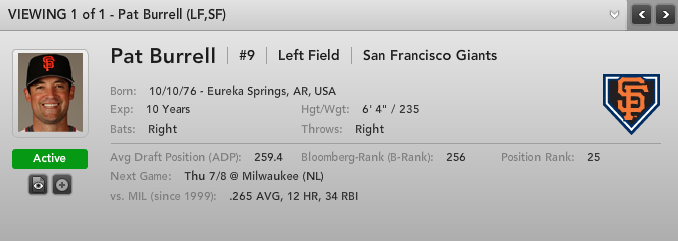
Nearly 18 months, $16 million, and 572 plate appearances later, the perfect marriage ended in divorce. Burrell never adjusted to life as a DH, or in the American League, or both. In the end, “the Bat” hit 16 home runs in his year-plus with the Rays – or $1 million per HR. Not one of those homers came against a left-handed pitcher.
On May 15th, the Rays designated Burrell for assignment. A few days later, the San Francisco Giants signed Burrell to a pro-rated contract for the league minimum. With the Rays fronting the bill, the signing came with little risk to the Giants. So far, they have been handsomely rewarded for their small gamble.
In 96 plate appearance for the Rays in 2010, Burrell hit .202/.292/.333 with two home runs. As a member of the Giants, he has 104 plate appearances – hitting .286/.365/.484 with five home runs. Look at those slash lines again. Burrell was a .200 hitter with an OPS of .625 with Tampa Bay. In nearly an identical sample size with San Francisco, he sports an OPS of .849 – the production the Rays thought they would get.

It is hard to say what changed between the two coasts. In Tampa Bay, Burrell looked lost. He had no power and struck out 33% of the time. Although his batting average on balls in play was a reasonable .273 this year with the club, his .202 batting average was paltry. In San Francisco, he is back to spraying line drives across the diamond, and hitting a home run once every 18 at-bats.
There are a few theories as to why Burrell is producing for his new club. First, Burrell is playing in the outfield with the Giants. He has played 22 games in the field since joining the club. Of his 146 games with the Rays, he stepped on the field as a defender in just two of them. It has been suggested that some players have difficulty adjusting to a DH role.
Another more likely reason is the transition from American League to National League. Burrell would not be the first, nor the last, player to struggle after switching leagues – much less going to the AL East, the most top-heavy division in baseball. In early June, DRaysbay.com ran a story comparing hitters who switched leagues in the off-season. In their sample selection, players going from the AL to NL hit better than projected. Players moving from the NL to AL were right around average.
Whatever the real reason for Burrell’s resurgence in the senior circuit, you should take advantage. Currently, he is owned in less than 10% of leagues and is started in less than 2%. If you have an outfielder on the DL in a mixed-league, or if Burrell’s somehow unclaimed in your NL-only league, be sure to scoop him up.
For more on Pat Burrell and potential waiver wire pickups, check out Bloomberg Sports’ Fantasy Kits.
What is happening to A.J. Burnett?
By Bloomberg Sports //
A.J. Burnett’s ERA is higher than it has ever been in his career, and Yankee fans wonder why. At the All-Star break, Burnett holds a 7-7 record with a 4.75 ERA, .85 higher than his career 3.90 mark. And that’s after two straight strong starts to end the first half.
The biggest cause of Burnett’s struggles is a reduction in strikeout rate. From 2008 to 2010, Burnett’s Ks have gone from 9.4/9 IP to 8.5/9 to 6.8/9. Burnett is essentially striking out one-third fewer batters he did in his contract year.
What has led to this trend? One statistic to consider is opponent whiff rate. If batters are swinging and missing less, then it would make sense that Burnett is less capable of striking batters out. During Burnett’s best season in terms of ERA, 2004, his whiff rate was 11.8%. In ’08, his best season in terms of number of wins, his whiff rate was 10.3.% This season: 7.3%.

Besides the decline in whiff rate, there’s also the issue of when those swings and misses transpire. Analyzed by counts, a general trend of lowered whiff rate in each type of count is seen from 2008 through 2010.
However, two numbers seem unusual, and significant, outside of the trend. One, while Burnett’s whiff rate has consistently gone down in a “neutral” count, e.g. 0-0, or 1-1 (from 7.8%, to 7.4%, to 6.4% over the past three seasons) even more drastic is the drop-off in whiff rate with two strikes. In 2008, that number stood at 17.3%; it fell to 14.9% in such situations for 2009, then 12.2% this season. Two, in both 2007 and 2008, Burnett’s whiff rate was higher behind in the count than ahead in the count, though still lower than with two strikes. However, in 2009 and 2010, his whiff rate has been higher ahead in the count than behind in the count, which should actually lead to more strikeouts.
Burnett’s whiff rate should be attributable to a specific part of his game, whether it’s velocity, control, or pitch patterns. While an overall decrease in whiff rate is unlikely to be the result of different pitch patterns, the reduced rate with two strikes, and the reduced percentage behind in the count relative to ahead in the count, may be explained by a difference in pitch trends. One noticeable pitching trend for Burnett is that with two strikes, while even or ahead in the count, he throws consistently more curveballs. However, with the count full, he has gone to his fastball more. Overall, Burnett has become more reliant on his curve with two sstrikes. This decision makes sense for Burnett, considering his curveball is statistically his best pitch in terms of whiff rate percentage this season, at 12.6%. Furthermore, hitters are batting .221 against the curveball, the lowest mark against any of his primary pitches. So, his pitching trends should only help his strikeout numbers improve, not decline.
Is his control impaired then? Actually, his control is the same this season as it has been his entire career. Burnett’s 3.8 BB/9 IP is identical to his career average, and even lower than last year’s “great season” in which he walked 4.2/9 innings. So Burnett’s pitch patterns have shifted, but should have only helped. And yet, he cannot strike people out.
Could the answer then lie in Burnett’s velocity? According to Fangraphs.com, Burnett’s velocity is down this season, averaging 93.2 MPH on his fastball, lower than his career 94.6 average, and way down from the 95.1 average in 2007. Even if Burnett’s velocity has declined, this would only matter if batters swung and missed at the fastball less as a result. However, in the tricky narration that is A.J. Burnett, batters are swinging and missing more often at his slower fastball, and whiffing less often at his curveball compared to years past. This season, batters are swinging and missing 6% of the time against his fastball, compared to 4% in 2009.
On the surface, it’s hard to understand the cause of Burnett’s strikeout struggles. It’s possible Burnett’s reduced fastball velocity is not affecting outcomes on his fastball, but rather on his curve. The velocity differential is reduced between the two pitches, allowing hitters more time to diagnose the curveball and its location. While Fangraphs suggested it’s the location of Burnett’s curveball that’s causing the righty’s problems, we can look at Bloomberg Sports tools to negate this idea.
The Trade Deadline and Fantasy Baseball: Part 2
by Eno Sarris //
We started looking at what the trade deadline means to fantasy baseball last week by first focusing on the pitchers that might change hands this trading season (you can now scratch Cliff Lee off the list of available hurlers). Now it’s time to look at the position players who might be wearing new laundry soon, and what it would mean to their fantasy value.
Corey Hart
The man with a pop idol’s name is having a good year from a fantasy perspective. But a look at his underlying skills shows many of his skills remaining unchanged. He’s walking at about the same frequency (8.7% this year, 9.1% last year) and striking out at around the same rate (21.8% this year, 22.0% last year). The biggest difference is his power: a massive .274 ISO (isolated slugging percentage, i.e. slugging percentage minus batting average) this year, .158 ISO last year.
Now Hart looks like a speedy, powerful outfielder on a bad team that’s ripe for the picking – just look at his spider graphs from Bloomberg Sports Fantasy Tools. He’s only under team control for another year, too, so the Brewers could be inclined to trade him. The good news for his owners in NL-only leagues is that he’s been most often linked to National League teams like the Giants and the Braves. The bad news is that both of those possible new parks suppress home runs compared to his current home park. AT&T suppresses home runs by 14.6% and Turner Field by 4.3%. Meanwhile, Miller Park increases home runs by 19.3%; so a move, especially to San Francisco, would be a big deal for his power potential for the second half. If owners weren’t trying to sell high already, this news should spur some movement.

Ty Wigginton/Miguel Tejada
The Baltimore Orioles lost one of their biggest trade pieces (and second-most likely mover in this week’s first trade piece) when Kevin Millwood went on the DL this week. But that shouldn’t stop the O’s from looking to move their infielders. Wigginton is actually having a good year, as he’s walking at a career-high rate (9.4%) and showing his usual good power (.190 ISO, .182 career ISO). If and when his BABIP recovers (.259 this year, .294 career), his batting average could normalize as well (he’s currently at .253/.336/.443). Because he’s eligible at so many positions, he’s a valuable bench player in head-to-head fantasy leagues, and a great backup in most leagues.
AL-only owners might be worried about the rumors concerning Philadelphia and San Diego, but it’s unclear how much trade value the up-and-down Wigginton has. He might be more of a free-agent acquisition for National League owners looking for a little power on the infield. Much of the same could be said about Miguel Tejada since the team has called up possible third baseman of the future Josh Bell. There haven’t been many rumors, but Tejada isn’t very useful to the Orioles right now, and probably won’t be a Type A free agent, so they could probably get their best value from the former shortstop in a trade. Tejada is most useful for managers writing him in the lineup at shortstop in deeper leagues. So like Wigginton, he won’t have much fantasy trade value.
Adam LaRoche/Kelly Johnson
This Arizona Diamondbacks pair is much like the Orioles’ duo: two decent veterans who don’t fit a rebuilding team’s future and can easily bring back more value in a trade than as free agents. Johnson has been a revelation in the desert, though, and is under team control for another year, so it would take a little more to pry him loose than it would to get the free-agent-to-be LaRoche. Johnson is walking at a career-high rate (13.5%) and his BABIP is close to neutral (.318 this year, .312 career), so some parts of his game will play anywhere. It is worth wondering if the career-high ISO (.227) would play the same in another park. His home park, Chase Field, currently augments home runs by 27.6%. While there have been general rumors that Johnson could leave town, no specific teams have been mentioned. For now, his fantasy owners should consider shopping him on both a sell-high basis, and to hedge against a trade to the AL. Don’t settle for a middling return, though: Johnson is an elite performer at second base for the moment.
LaRoche is having another of his patented seasons, with a mediocre batting average and 25-home run power. But as a free-agent-to-be, he could easily be acquired by a contending team looking to add power at first base, DH, or even off the bench. No rumors are out there right now, and the fact that he’s got little-to-no fantasy trade value in standard 12-team leagues means he’s a hold if he’s on your roster.
Cody Ross/Dan Uggla
Florida is only five games under .500, but the Marlins are already 10 games out of first, and more importantly, with many strong teams in front of them in both the NL East and Wild Card races. Both Ross and Uggla are under team control for next year. But Ross ($4.45 million in 2010) and Uggla ($7.8 million) are already expensive, and could become too pricey in arbitration for a Marlins team known for its penny-pinching ways. Ross is having a strange year, as he finally has a nice batting average for once (.288), but it’s propped up by an unsustainable BABIP (.348). Unfortunately, his power has suffered (.138 ISO, .205 career); still, a move out of Florida (which suppresses home runs by 19.9%) would help in that category. Uggla is doing what he always does, but his home slugging percentage (.485) is virtually identical to his away number in that category (.480), so a move out of town might not affect his power as much. The only specific rumor on either player is Uggla to the Rockies, which would have to be seen as a win for Uggla owners.
David DeJesus/Jose Guillen
Another duo from a terrible team here, but rumors are still just of a general nature. Honestly, Guillen owners have to feel happy that they got anything from the aging slugger. They have already put those 14 home runs in the bank, and they got them for a bargain price. Anyway, Guillen is best suited to DH and should move within his league, if at all. With his griping to the press, he’s not making himself more marketable, though. DeJesus, on the other hand, is a good all-around hitter and a strong defender, and the team has an option for next year. He’s also not a great fantasy player. Because of his poor power (.136 ISO, .150 is average), mediocre base-stealing ability (47 career stolen bases in 867 games), and position (outfield), he just doesn’t do enough to be a strong fantasy player. Check out his spider graphs from Bloomberg Sports Fantasy Tools. Meh.  None of these factors will change with a change of venue, either, so if you’re playing DeJesus in a five-outfielder deep league, you’ll just have to find another high-batting average/low-power and low-speed bat to replace him should he go to the National League.
The First Basemen
We’ll lump these guys together because the aging first baseman/designated hitter is not one of the most valuable commodities in real or fantasy baseball. They’re a bit too fungible. With that said, Adam Dunn is the prize of the group, a legitimate 40-home run man whose legendarily poor defense would play a lot better as a designated hitter in the American League. His NL-only owners should be nervous around this time of the year, and there is a White Sox rumor about Dunn making the rounds presently. Of course, the Nationals have also said they want to sign him to an extension, so Dunn might stay put.
Then there’s the case of Lance Berkman and Lyle Overbay, whose teams would love to move them, if just to save a little money. Berkman’s power has been declining for three straight years now, and his knee may be arthritic. That makes him hard to trade, despite the chance that he goes to the Angels, for example. Overbay is pretty much a bench bat in both fantasy and real-life baseball, so the impact of a possible trade would be low.
For more on Corey Hart and other possible trade-deadline movers, check out Bloomberg Sports’ Fantasy Tools.
(Video) Ballpark Figures: Stock Report
By Bloomberg Sports //
Ballpark Figures: Stock Report — Bloomberg Television’s Michele Steele and Bloomberg Sports Fantasy Analyst Rob Shaw talk some fantasy baseball. The topic of the day are the Bulls and Bears.
 Bloomberg Sports