Tagged: Chicago White Sox
Jake Peavy’s Struggles
By R.J. Anderson //
Four starts into his 2010 season, Jake Peavy continues to experience some issues. He’s lasted beyond the fifth inning just once in four starts, and his usually solid K/BB ratio is down to a morbid 1:1. For perspective, Peavy’s previous career low in that statistic was 1.90 and that came in his first full season in the majors. Peavy is only striking out six batters per nine (also walking six) and he’s allowed three homers already; he allowed eight in 101.2 innings last season.

One of the problems has been Peavy’s inability to miss bats. FanGraphs has batters whiffing at Peavy’s pitches 10% to 12% of the time throughout his career. His swinging strike rate this season is a disconcerting 6.4%. Why is that important? Because swinging strikes correlate extremely well with strikeouts. Which makes sense on a basic level — i.e. the better the stuff, the more swings and misses, and the higher likelihood of at-bats ending in strikeouts. Despite a static velocity reading on his fastball and a presumably healthy elbow, Peavy’s results — in a small sample of four starts, anyway — suggest his stuff has been subpar and extremely hittable.
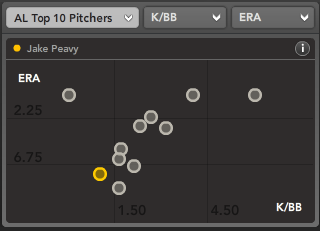 It should be noted that Peavy’s increased gopherball tendencies are expected. As with any pitcher who moves from the National League to the American League, Peavy’s numbers are going to look rougher. Combine the improved level of competition as well as facing the designated hitter instead of a pitcher and you’ve got a recipe for a rising ERA. Peavy’s numbers are going to experience a double whammy though, since he’s moving from perhaps the most pitcher-friendly park in baseball in Petco Park to a the homer haven that is U.S. Cellular Field. About 10% of Peavy’s flyballs are going for home runs; the reality is that number is closer to the projected total than his previous seasons in Petco suggest.
Another thing to keep in mind about Peavy’s performance is his Batting Average on Balls in Play (BABIP). About 32% of the balls being put into play against him are turning into hits, which is high, but not absurdly so. Chicago’s so-so defense features iffy defenders like Carlos Quentin, so don’t expect Peavy’s BABIP to see much positive regression, barring a big streak of luck. That leaves Peavy as a pitcher who, right now, is throwing less than his best stuff and having it hammered around and out of the park. Not quite the pitcher who led the majors in strikeouts during the 2007 season.
It might be too early to drop Peavy in standard mixed leagues, and he holds little trade value at this point. That means the best option could be placing him on the bench and waiting.
For more on Jake Peavy and other struggling starting pitchers, check out Bloomberg Sports’ Fantasy Tools.
Bloomberg Sports 2010 American League Central Preview
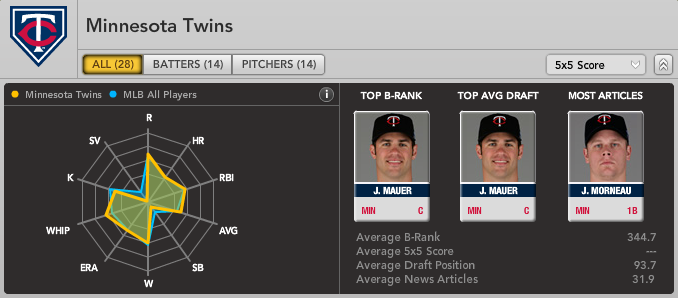


odate such optimism. Even local writers scratch their heads about whether the team has a plan.
Gordon Beckham Position Switch Adds Value to Second Base
By Tommy Rancel
It didn’t take long for Gordon Beckham to prove to the White Sox that he was ready for the major leagues in 2009. The eighth-overall pick in the 2008 draft (second Beckham overall, behind Tim) made his major league debut just 364 days after being drafted.
The University of Georgia product didn’t disappoint, as he hit .269/.347/.460 (AVG/OBP/SLG) with 14 home runs and 63 RBI in 103 games. He was named American League Rookie of the Year by The Sporting News and the Major League Baseball Players Association.
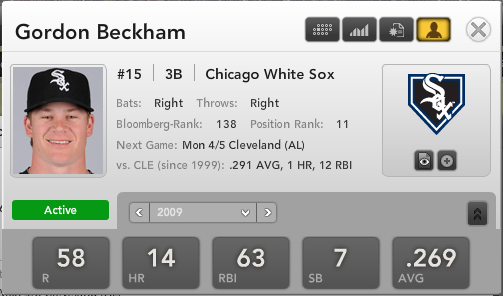
Beckham, a shortstop in college, played third base exclusively at the major league level. If we stretched his 14 home runs and 63 RBI over a 162-game schedule, we get a projected total of 22 home runs and 99 RBI. Those numbers are not bad for a third baseman, but fall well below the top producers at the position like Evan Longoria and Alex Rodriguez.
With the acquisition of Mark Teahen this off-season, Beckham will try a new position in the majors; second base. If we take those same 22 home runs and 99 RBI, and apply them to second base, only Aaron Hill of the Blue Jays topped those numbers at the AL keystone position last season.
Looking back at some batted-ball data from 2009, we can get a feel for Beckham in 2010. Among numbers we like to look at as “fluke” stats, namely batting average on balls in play (BABIP) and home run-to-fly ball ratio (HR/FB), Beckham scores well. His .290 BABIP was slightly below average, and could jump over .300 with more line drives (16.6% line drives last year). This would bring his batting average closer to the .280 mark.
Beckham will play a full season at U.S. Cellular Field in 2010. The home of the White Sox had the fourth-highest home run rate in 2009. Because of this, it’s possible that Beckham’s HR/FB rate could move up, placing him among the league’s top power-hitting second basemen.
Another good sign from Beckham was his patience at the plate. He struck out 17.2% of the time last season, but he also walked nearly 9.5% of the time. For reference, Evan Longoria walked 9.1% of the time as a rookie, but struck out 27.2%. With a sharper batting eye, Beckham could increase his walk total, bump up his OBP, and create more run-scoring opportunities.
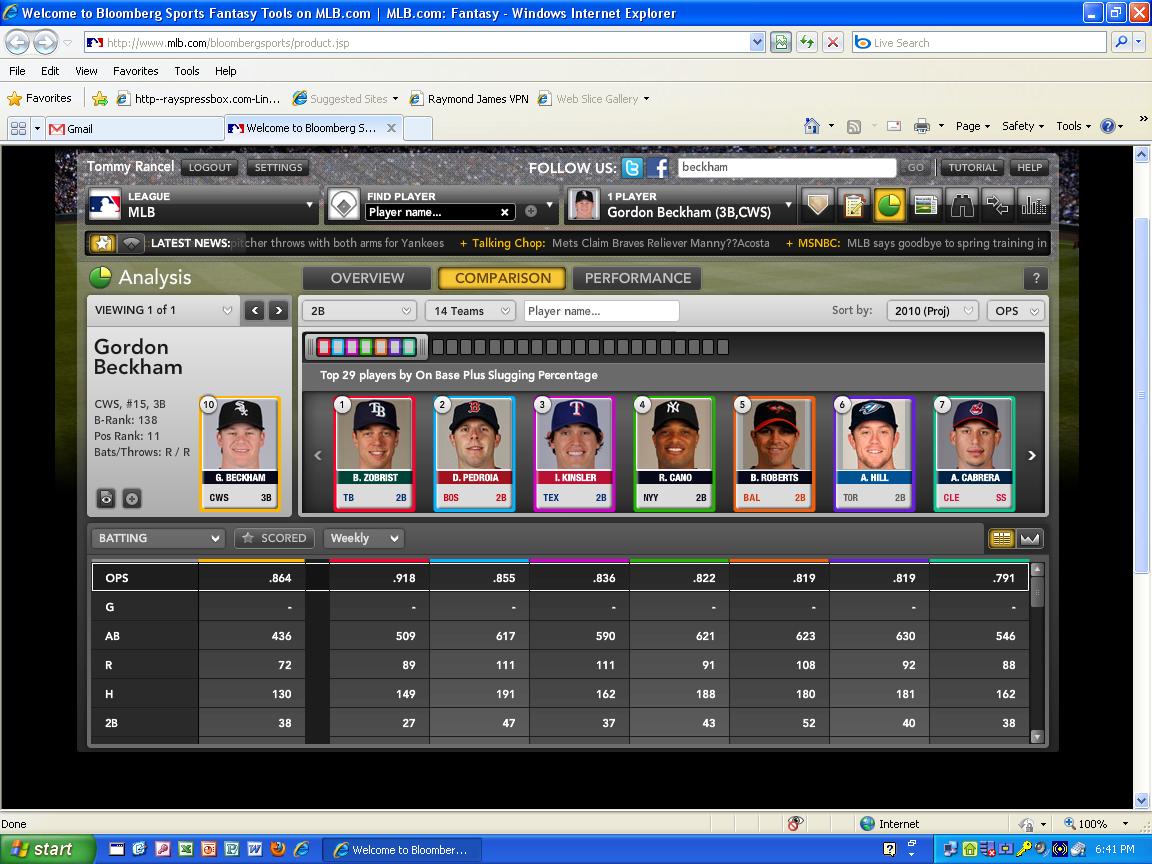
Beckham’s average draft position (ADP) was 88.2 before Opening Day, which would rank sixth among AL second basemen behind Ian Kinsler, Brian Roberts, Dustin Pedroia, Ben Zobrist and Robinson Cano. He’ll need to meet your league’s in-season eligibility standards first – but that’s impressive company. Looking at Bloomberg Sports’ projections, Beckham’s .864 OPS in 2010 is projected as second-highest figure for AL second basemen.
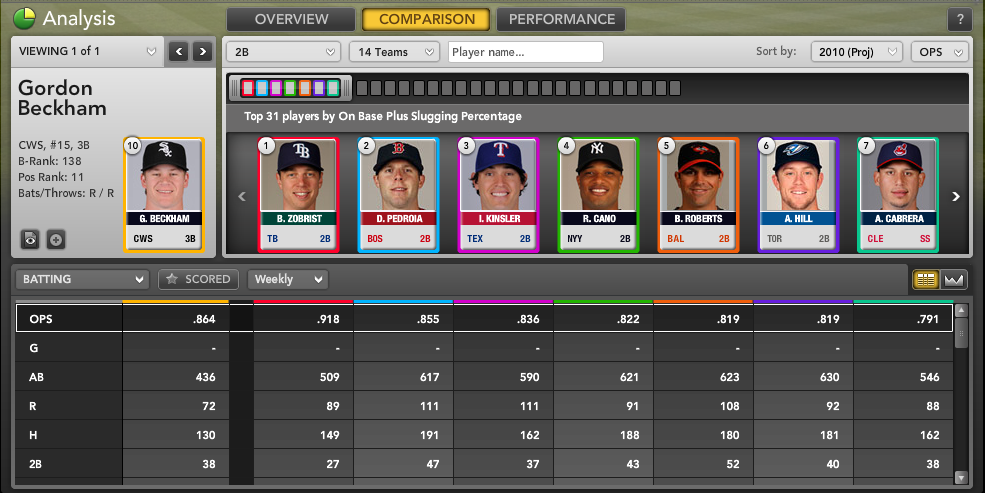
Because he played third base last season, Beckham will carry multiple position eligibility that Kinsler, Roberts, Pedroia, Cano, and Hill don’t have. Though your draft has ended and the season has begun, see if you can pry Beckham loose from a leaguemate with a well-timed trade offer. The move could prove a big help to your 2010 fantasy team.
For more on Gordon Beckham and other players switching positions in 2010, check out Bloomberg Sports’ fantasy kits.
 Bloomberg Sports